Electricity must pass through several stages before reaching homes, commercial buildings and industrial facilities. Substations manage these stages by controlling voltage levels and directing power through the distribution network. At the centre of this process, an electrical substation transformer helps adjust voltage to meet the requirements of transmission and distribution systems. Its capacity, construction and operating condition influence how efficiently a substation supplies electricity. Understanding how these transformers work, what features matter during selection and how maintenance affects their service life can help utilities and industrial operators make better equipment decisions.
The Role of Transformers in Electrical Substations
Electrical substations connect different parts of the power network and help maintain a controlled flow of electricity. Transformers perform voltage conversion within these facilities, allowing power to move between transmission and distribution systems.
Electricity generated at power stations often travels over long distances at high voltages to reduce transmission losses. Before it reaches local distribution networks, substations use transformers to lower the voltage to suitable levels. Other substations perform the opposite function by increasing voltage before electricity enters transmission lines.
Transformer performance affects several aspects of substation operation, including:
- Voltage regulation: Maintains suitable voltage levels for connected equipment and networks.
- Power transfer: Allows electricity to move between systems operating at different voltage levels.
- Network efficiency: Helps reduce energy losses during transmission and distribution.
- Operational reliability: Supports consistent electricity supply when equipment operates within its rated limits.
- Load management: Accommodates changing electricity demand across connected networks.
The correct transformer specification helps prevent unnecessary operating stress and supports dependable power delivery.
How an Electrical Transformer Substation Operates
An electrical transformer substation contains several interconnected components that work together to control and distribute electrical power. The transformer changes voltage through electromagnetic induction, using primary and secondary windings arranged around a magnetic core.
When alternating current flows through the primary winding, it produces a changing magnetic field in the core. This field induces voltage in the secondary winding. The relationship between the number of turns in each winding determines the voltage transformation.
A typical substation may include:
- Power transformers: Change voltage levels between transmission and distribution networks.
- Circuit breakers: Interrupt electrical current during faults or maintenance operations.
- Disconnectors: Isolate equipment for inspection and repair.
- Current transformers: Provide reduced current signals for protection and measurement.
- Voltage transformers: Supply voltage signals to monitoring and protection systems.
- Surge arresters: Protect electrical equipment against damaging voltage surges.
- Busbars: Distribute electrical power between incoming and outgoing circuits.
Each component has a specific function. Their coordination allows operators to isolate faults, monitor system conditions and maintain safe electrical operations.
What Makes a Main Transformer in a Substation Different?
The main transformer in a substation usually handles a substantial share of the electrical power transferred through the facility. Its capacity and voltage ratings depend on the network design, expected load and the role of the substation.
Unlike smaller auxiliary transformers, the main unit may supply several distribution feeders or connect major transmission circuits. A failure can therefore affect a large number of customers or interrupt industrial operations.
Several technical specifications deserve attention when selecting a main transformer:
Rated power capacity: Measured in kilovolt-amperes (kVA) or megavolt-amperes (MVA), this indicates the load the transformer can handle under specified operating conditions.
Primary and secondary voltage: These ratings must match the electrical network and connected equipment.
Impedance: Transformer impedance influences fault current levels and voltage regulation.
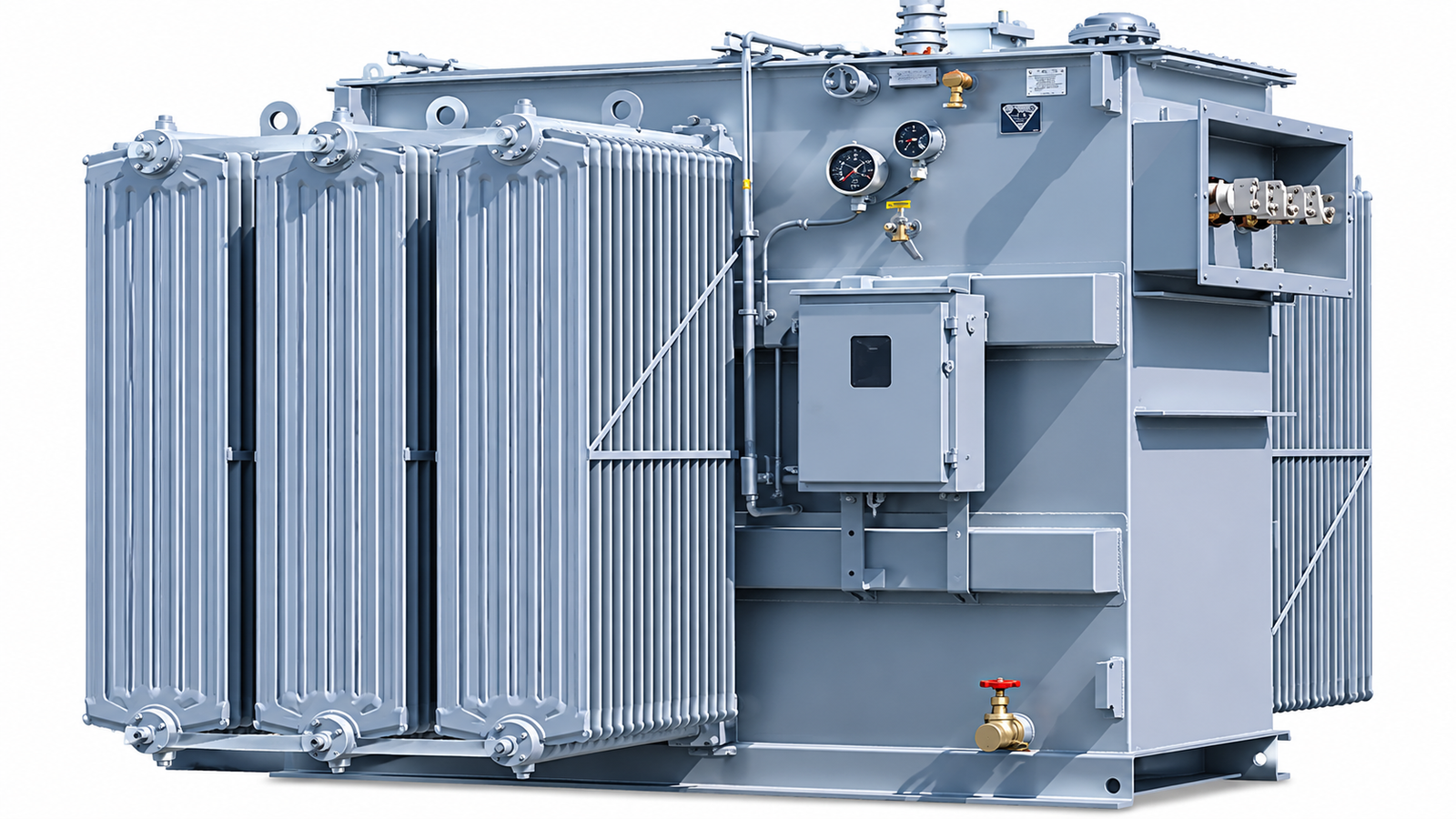
Cooling arrangement: Oil-immersed units may use natural or forced oil and air circulation. Dry-type designs use air-based cooling methods.
Vector group: This identifies winding connections and phase displacement, which matter when transformers operate in parallel.
Tap changer: An off-circuit or on-load tap changer adjusts the turns ratio to help regulate output voltage.
Matching these specifications with actual network requirements reduces the risk of overheating, excessive losses and operational problems.
Different Types of Substation Power Transformers
A substation power transformer can be designed for different voltage levels, installation environments and operating demands. The choice depends on the electrical network, available space, safety requirements and maintenance arrangements.
Step-Up Transformers
Step-up transformers increase voltage before electricity enters high-voltage transmission lines. Higher transmission voltages help reduce current for a given power transfer, which can lower resistive losses across long distances.
Step-Down Transformers
Step-down transformers reduce voltage at receiving substations and distribution facilities. They prepare electricity for regional networks, commercial users and industrial applications.
Autotransformers
Autotransformers use a shared winding for primary and secondary circuits. They can provide an economical option for certain voltage conversion applications, particularly where the voltage ratio is relatively close.
Distribution Transformers
Distribution transformers reduce voltage to levels suitable for local electricity supply. They are commonly installed near residential areas, commercial developments and smaller industrial facilities.
Dry-Type Transformers
Dry-type units use air rather than insulating liquid for cooling and insulation. They are often considered for indoor installations, buildings and locations where liquid containment requirements make oil-filled equipment less suitable.
Important Factors When Selecting Substation Transformers for Sale
Purchasing high-voltage equipment requires more than comparing prices and delivery schedules. Buyers must assess the technical specifications, manufacturing quality and long-term operating requirements of each unit.
When reviewing substation transformers for sale, consider the following points:
- Application requirements: Identify whether the transformer will serve a transmission, industrial or distribution network.
- Load profile: Review current demand, expected future growth and possible peak loading conditions.
- Efficiency: Compare no-load and load losses to estimate long-term energy costs.
- Insulation system: Check insulation ratings, dielectric performance and suitability for the operating environment.
- Protection features: Review temperature monitoring, pressure relief, oil-level indicators and other safety provisions where applicable.
- Environmental conditions: Consider ambient temperature, humidity, altitude, pollution and exposure to corrosive substances.
- Standards and testing: Confirm compliance with relevant IEC, IEEE or applicable national standards.
- Manufacturer support: Assess documentation, spare-parts availability, warranty terms and technical assistance.
Factory acceptance testing can provide valuable information about the equipment before dispatch. Common tests include winding resistance measurement, voltage ratio verification, insulation checks, impedance measurement and routine dielectric tests.
Maintenance Practices That Extend Transformer Service Life
Regular inspection helps identify developing faults before they cause major equipment damage. Maintenance schedules should reflect the manufacturer’s recommendations, operating conditions and the criticality of the installation.
Useful maintenance activities include:
- Checking oil levels and inspecting for leaks in oil-filled units.
- Monitoring winding and oil temperatures.
- Inspecting bushings for cracks, contamination and discharge marks.
- Testing insulating oil for moisture, dielectric strength and dissolved gases.
- Examining cooling fans, pumps and radiators.
- Checking electrical connections for signs of overheating.
- Reviewing protection relay operation and alarm records.
- Maintaining accurate inspection and testing records.
Dissolved gas analysis is particularly useful for oil-filled transformers. It can help identify signs of overheating, partial discharge and arcing within the equipment.
Condition-based maintenance can also help operators decide when further testing or repairs are necessary. Rather than relying only on fixed inspection intervals, this method uses equipment condition and performance data to guide maintenance decisions.
Improving Substation Reliability Through Better Equipment Planning
Transformer selection should form part of a wider substation planning process. Engineers need to consider system capacity, redundancy, fault levels, protection coordination and future network expansion.
For critical facilities, installing an additional transformer or providing alternative supply arrangements may reduce the consequences of an individual equipment failure. Adequate ventilation, fire protection, drainage and access for maintenance crews also contribute to safe operation.
Accurate technical documentation is equally valuable. Single-line diagrams, equipment ratings, test reports and maintenance histories help engineers understand the installation and plan future upgrades.
A well-specified transformer, supported by regular condition monitoring and appropriate protection systems, gives substations a dependable foundation for electricity transmission and distribution. Careful evaluation before purchase and consistent attention throughout the equipment’s operating life can reduce avoidable failures, control maintenance costs and support a stable power network.