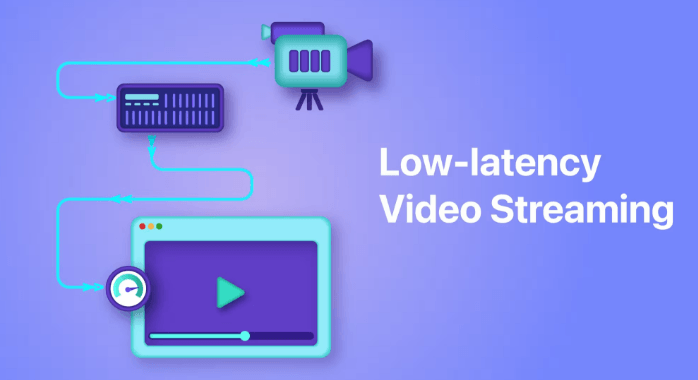
The expansion of mobile broadband networks across emerging markets has altered consumer expectations for digital entertainment. Where online media consumption once centered on asynchronous video delivery—such as pre-recorded streaming on demand or downloadable titles—the current landscape is heavily defined by synchronous, real-time interactivity. Audiences increasingly demand live broadcast feeds coupled with immediate transactional processing, dynamic UI updates, and direct two-way interaction with human hosts.
Achieving sub-second video latency alongside stable client-server synchronization presents complex engineering challenges. Media platforms must reconcile high-definition video encoding, unpredictable mobile network throughput, real-time state synchronization, and localized financial rails. Examining the underlying architecture of low-latency streaming infrastructure illuminates how digital platforms sustain high concurrent user volumes while keeping visual feeds and transactional states aligned.
Architectural Drivers of Low-Latency Live Video in Modern Interactive Gaming
Traditional HTTP Live Streaming (HLS) protocols typically introduce segment latencies ranging from 6 to 30 seconds due to chunk-based media segmentation and deep buffer requirements. While acceptable for non-interactive broadcasts such as sporting events or recorded television, this latency window breaks real-time interactive loops where user input must yield immediate visual feedback. Consequently, platforms facilitating synchronous live interaction rely on low-latency streaming protocols such as WebRTC (Web Real-Time Communication) or Low-Latency HLS (LL-HLS), which reduce glass-to-glass latency to under 500 milliseconds.
The operational architecture of specialized interactive environments demonstrates the practical necessity of this network synchronization. For instance, platforms hosting live dealer feeds and multi-player tables, such as the tamasha live casino in india environment, rely on high-frame-rate low-latency video feeds combined with synchronized micro-transaction processing to ensure seamless state reconciliation between dealer action and user interfaces across variable mobile networks. In such environments, a delay of even two seconds invalidates game states, desynchronizes action windows, and compromises the integrity of physical card distribution or wheel spins captured on camera.
To maintain continuous synchronization, engineers decouple the heavy media stream from lightweight transactional metadata. Video frames are transmitted via UDP-based WebRTC protocols managed by distributed media servers, while state data—such as user selections, timer countdowns, and host confirmation events—flows through persistent WebSockets or HTTP/2 Server-Sent Events (SSE). This bi-directional communication layer ensures that dynamic screen overlays update in real time without requiring video re-encoding or causing frame drops.
Network Optimization and Bandwidth Adaptation Across Mobile-First Economies
Deploying sub-second live video to mobile devices across diverse geographic regions requires aggressive bandwidth adaptation and edge distribution strategies. Network infrastructure in developing markets frequently exhibits high jitter, packet loss, and localized bandwidth throttles, particularly during peak usage hours. To mitigate these conditions without terminating sessions, content delivery networks (CDNs) employ multi-bitrate transcoders deployed at edge nodes close to end users.
Adaptive Bitrate (ABR) algorithms continuously evaluate key client metrics, including buffer occupancy, round-trip time (RTT), and TCP window size. When network conditions degrade, the stream dynamically shifts down to lower-resolution profiles or lower frame rates without disrupting the WebSocket data connection. This separation prevents total session disconnects, preserving user state and interactive functionality even when video quality scales down temporarily.
| Protocol | Typical Latency | Transport Layer | Primary Use Case | Network Resilience |
|---|---|---|---|---|
| WebRTC | 200–500 ms | UDP / SRTP | Sub-second real-time interaction | Adaptive via NACK & FEC |
| Low-Latency HLS | 1.0–2.5 s | HTTP/2 or HTTP/3 | Interactive streams, live Q&A | High, fallback to standard HLS |
| Standard HLS | 6–15 s | HTTP/1.1 or HTTP/2 | Traditional live broadcasting | Highest, large buffer allowances |
Forward Error Correction (FEC) and Negative Acknowledgement (NACK) mechanisms further strengthen stream stability over lossy wireless connections. FEC appends redundant data packages to video payloads, allowing client devices to reconstruct lost frames without requesting retransmissions. When packet loss exceeds FEC capacity, selective NACK requests trigger rapid retransmissions of missing UDP packets before rendering deadlines expire, avoiding frame freezing.
Integration of Localized Financial Rails and Session Security
A critical requirement for interactive live platforms is the integration of localized payment gateways capable of handling instant micro-transactions. In markets dominated by mobile wallet ecosystems and unified payment interfaces, transactional latency must match media stream latency. Delayed confirmation of deposits or rapid balance updates undermines user trust and disrupts live session flows.
To achieve continuous financial state consistency during high-concurrency events, platforms connect backend transaction engines directly to event-driven architectures built on message brokers like Apache Kafka or RabbitMQ. When a transaction completes via local rails such as UPI or instant bank transfer APIs, the payment gateway triggers an asynchronous event that updates the user central ledger within milliseconds. The updated state propagates via WebSockets to the client UI, allowing immediate participation in active live rounds.
Session security in high-throughput streaming environments demands robust authentication layers to prevent unauthorized API calls, automated bot interaction, and stream hijacking. Security workflows implement multi-layered defenses:
- Tokenized Transport: Dynamic JSON Web Tokens (JWT) appended to WebSocket handshakes to authorize individual stream sessions and validate channel permissions.
- Edge Security Rules: Web Application Firewall (WAF) policies deployed at CDN points of presence to filter DDoS attacks and rate-limit rapid automated API calls.
- End-to-End Encryption: Secure Real-time Transport Protocol (SRTP) for video media encryption alongside TLS 1.3 for all WebSocket and REST API control channels.
- Cryptographic Verification: Server-side timestamping and digital signatures on event payloads to prevent replay attacks during live interaction windows.
UI Overhead and DOM Optimization in High-Density Interactive Interfaces
Designing user interfaces for real-time live video platforms requires balancing visual richness with device hardware limitations. Mobile web browsers and hybrid application webviews possess restricted CPU and GPU budgets. Overlaying dynamic UI components—such as real-time interaction grids, live chat feeds, dynamic odds displays, and animated graphical overlays—directly on top of a decoding hardware video layer can lead to severe DOM thrashing and frame drops if not engineered carefully.
Frontend developers resolve these constraints by utilizing hardware-accelerated rendering techniques via HTML5 Canvas or WebGL for dynamic overlay elements, minimizing standard DOM node updates. By delegating interface animations, timer progress bars, and high-frequency numerical updates to a single canvas element operating on a dedicated requestAnimationFrame loop, CPU main-thread execution time drops significantly. This structural decoupling ensures smooth 60 FPS UI performance even on entry-level smartphone processors.
The Operational Trajectory of High-Frequency Interactive Media
The technical convergence of low-latency video transmission, edge CDN distribution, localized micro-transaction processing, and client-side rendering optimization has transformed the structure of online interactive media. Real-time engagement models are no longer constrained by the high latency of traditional streaming architectures. Platforms operating in competitive regional markets succeed by maintaining tight operational integration across these technical vectors.
As mobile network throughput continues to improve with 5G rollouts and edge computing expansion, the boundary between passive video consumption and active real-time participation will dissolve further. Engineering teams that prioritize resilient low-latency video transport, localized financial integration, and lightweight UI rendering will maintain a decisive technical foundation in the evolving digital entertainment landscape.